

Most people spend more time comparing prices than checking what they actually receive. This is especially true in SEO, where backlink packages can look remarkably similar despite offering completely different levels of quality. Before you purchase backlinks, consider something that rarely appears in promotional descriptions: what happens after your payment is processed, the article is published, and the link appears in your report?
A backlink isn't a physical product you can inspect before buying. You're paying for a placement on someone else's website, under conditions you might not fully control.
That makes choosing the right publication important. But knowing how to verify delivery, monitor quality, and protect your budget is just as essential.
The Backlink Is Live, but Is the Job Really Finished?
Imagine ordering ten article placements for a website selling home renovation products.
The publisher confirms that all ten articles are online. You receive a spreadsheet containing the URLs, check that the links exist, and consider the campaign complete.
Three weeks later, you discover that two articles have disappeared. Another contains a link pointing to the wrong page, and one publication is blocked from search engine indexing.
"Everything was marked as completed," you tell the provider. "Why weren't these problems identified earlier?"
This is where professional backlink management becomes more than simply arranging publications.
When businesses purchase backlinks, they should understand how articles are checked, how errors are handled, and what conditions apply after publication.
A working hyperlink is only the beginning of the verification process.
Why People Purchase Backlinks Without Checking the Details
The backlink market encourages quick decisions.
Buyers frequently compare three numbers: price, Domain Rating, and backlink quantity.
These measurements are easy to understand, and they create the impression that different offers can be compared directly.
Unfortunately, they leave out important details.
Two websites with similar authority metrics may have completely different audiences, editorial standards, and traffic patterns.
One might publish carefully researched articles about a specific industry.
Another might publish dozens of unrelated promotional posts every day.
When you buy good backlinks, the publishing environment matters just as much as the numbers displayed in an SEO tool.
Before purchasing, investigate the actual website, not merely its metrics.
Purchase Backlinks With a Proper Quality Checklist
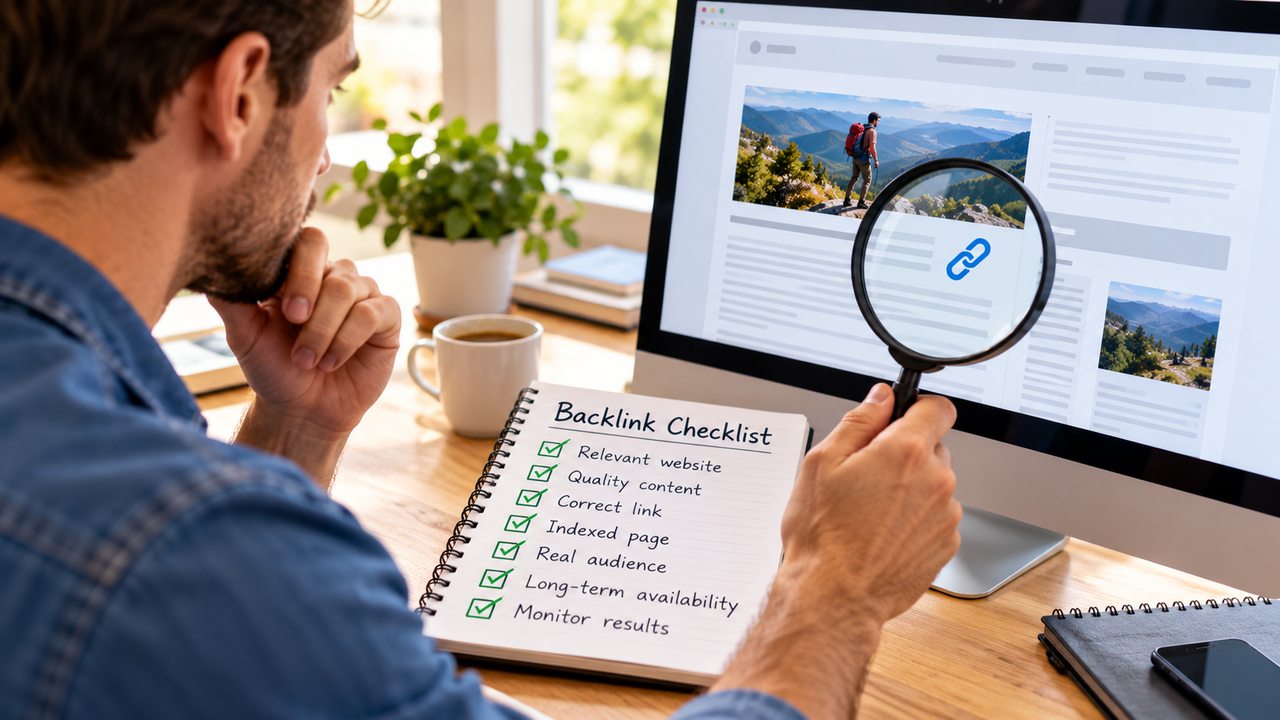
A simple quality checklist can prevent many disappointing purchases.
Before placing an order, review these seven factors:
• Publisher relevance: Does the website regularly cover subjects connected to your industry?
• Content originality: Will the article provide useful information rather than generic promotional text?
• Website accessibility: Can ordinary visitors and search engines access the publication?
• Link accuracy: Will the backlink point to the correct destination page?
• Editorial conditions: Does the publisher explain its content requirements and advertising policies?
• Publication duration: Is the article expected to remain available, and for how long?
• Problem resolution: What happens if the article disappears or contains an error?
These questions may appear basic, but overlooking them can lead to unnecessary spending.
A professional buy backlink service should make its publication conditions understandable before customers commit their budgets.
The Difference Between a Published Article and an Indexed Article
This is an area where many website owners become confused.
An article can exist on a website without appearing in Google's search index.
Perhaps the page is new and hasn't been discovered yet.
Maybe the publisher has technical issues, uses a noindex directive, or restricts crawling.
Sometimes Google simply decides not to index the page.
If you buy backlinks online, understanding this distinction can help establish realistic expectations.
Publication means that the article is accessible at its assigned URL.
Indexing means that a search engine has included the page in its searchable index.
Neither condition automatically guarantees ranking value.
Google also prohibits buying links intended to manipulate search rankings. Paid promotional links should use appropriate attributes, such as rel="sponsored" or rel="nofollow".
An indexed sponsored article may still be useful for brand exposure and referral visitors without passing ranking credit.
Why the Cheapest Backlink Can Cost More Later
Imagine choosing between two publishing offers.
The first costs $25 and includes no clearly defined support after publication.
The second costs $80 but includes original content, transparent publication conditions, and a defined process for correcting errors.
Which is cheaper?
Initially, the $25 placement.
But suppose the article disappears after one month and you need to purchase a replacement.
Suddenly, the original saving looks less attractive.
This doesn't mean expensive backlinks are automatically better.
A modestly priced publication can provide excellent value if the publisher is reputable and the audience is relevant.
The important principle is to calculate the complete cost of the placement.
Businesses looking to purchase backlinks should consider content creation, editorial revisions, monitoring, and replacement conditions alongside the advertised price.
Are You Buying Backlinks for Traffic or Just for a Report?
Here's a question worth asking before your next purchase.
"If nobody clicks this link, will I still consider the publication successful?"
Your answer reveals a great deal about your strategy.
Some businesses buy backlinks simply because their competitors have more referring domains.
Others want to reach new readers through relevant industry articles.
These are different objectives.
Suppose a sponsored publication costs $120.
During its first two months, it generates 140 visitors, including several potential customers.
Another publication costs $40 but generates no visits or inquiries.
The more expensive placement could be the better investment.
When businesses buy relevant backlinks, they should evaluate the potential audience rather than assuming every link has equal commercial value.
Why You Should Check the Destination Page Before Purchasing
There is another common problem that has nothing to do with the publishing website.
The backlink works perfectly, but the destination page disappoints visitors.
Imagine reading a detailed article about selecting equipment for a small restaurant.
You click a reference expecting a practical buying guide.
Instead, you arrive on a page containing outdated products, confusing navigation, and almost no useful information.
Would you stay?
Probably not.
Before deciding to buy backlinks for website promotion, examine the page receiving visitors.
It should answer relevant questions, load properly, and provide an obvious next step.
External publications can create opportunities for discovery, but your own website determines whether those opportunities lead to engagement.
Purchase Backlinks Gradually and Learn From the Results
Large backlink packages may offer convenient pricing, but purchasing everything at once can limit your ability to learn.
Consider starting with a smaller selection of publications representing different relevant audiences.
For example, a website selling outdoor clothing might test articles about hiking preparation, camping equipment, and winter travel.
After publication, review which topics generate useful traffic.
Perhaps hiking articles attract more engaged visitors than general travel content.
That information can guide future spending.
Rather than repeatedly deciding to purchase backlinks based on quantity, adjust your approach using actual campaign performance.
A gradual strategy also allows time to identify editorial issues before committing a larger budget.
What Happens When Purchased Backlinks Disappear?
Missing backlinks can create frustration, particularly when a customer expected a long-term placement.
However, disappearing links have several possible explanations.
The publisher may have changed the article URL, removed outdated content, reorganized its website, or experienced a technical problem.
The first step is identifying what happened.
Check whether the page returns an error, redirects elsewhere, or remains accessible without the original hyperlink.
Then review the publication agreement.
Businesses interested in offers to buy permanent backlinks should clarify whether permanence means an indefinite placement, a defined guarantee, or replacement eligibility.
No publisher can guarantee that a website will operate forever.
Clear conditions are therefore more useful than vague promises.
How to Measure the Performance of Purchased Backlinks
A successful publishing campaign requires more than checking whether articles exist.
Monitor what happens after publication.
Useful measurements include:
• Number of successfully published articles
• Continued availability of publication URLs
• Referral traffic generated by individual articles
• Engagement on destination pages
• Customer inquiries or purchases
• Brand visibility within relevant publications
• Changes in broader organic search performance
However, remember that paid links appropriately qualified as sponsored aren't intended to pass ranking credit.
Organic search performance depends on many additional factors, including website quality, technical SEO, competition, and search intent.
The most meaningful campaign reports distinguish between confirmed publications and actual marketing outcomes.
Frequently Asked Questions
Is it safe to purchase backlinks?
Paid sponsored publications can be legitimate marketing activities when appropriate disclosure and link attributes are used. Purchasing links specifically to manipulate Google rankings violates its spam policies.
Where can I purchase backlinks online?
Sponsored article placements can be arranged through individual publishers or publishing marketplaces. Always compare relevance, editorial standards, and publication conditions.
How can I check purchased backlinks?
Open the publication URL, verify that the link points to the correct page, inspect its attributes, and confirm that the article remains accessible. Indexing can be assessed separately.
Should I purchase backlinks from high-DR websites?
Domain Rating can provide useful comparison information, but it isn't a direct Google ranking factor. Publisher relevance and editorial quality should also influence your decision.
Are permanent backlinks guaranteed to last forever?
No. Permanent placements generally have no planned expiration date, but publishers may change policies, restructure websites, or cease operating.
How often should I monitor purchased backlinks?
A check shortly after publication followed by periodic reviews is sensible. Monitoring frequency depends on the campaign's size, value, and agreed publication conditions.
Smart Buyers Don't Stop Paying Attention After Checkout
The biggest mistake isn't necessarily choosing an inexpensive backlink.
It's assuming that a completed order means the entire investment has been successful.
When you purchase backlinks, you're entering an arrangement involving external publishers, editorial content, publication conditions, and potential readers.
All these elements deserve attention.
Choose relevant websites, verify what was delivered, and measure whether the publications contribute to your marketing objectives.
As one experienced website owner might explain:
"I stopped celebrating the number of backlinks I purchased. Now I look at which articles are still online, which ones attract visitors, and whether they bring any business."
That's a more practical way to approach external publishing.
A backlink purchase should be judged not only by what you receive on publication day, but by the value the publication continues to provide afterward.